
 By martin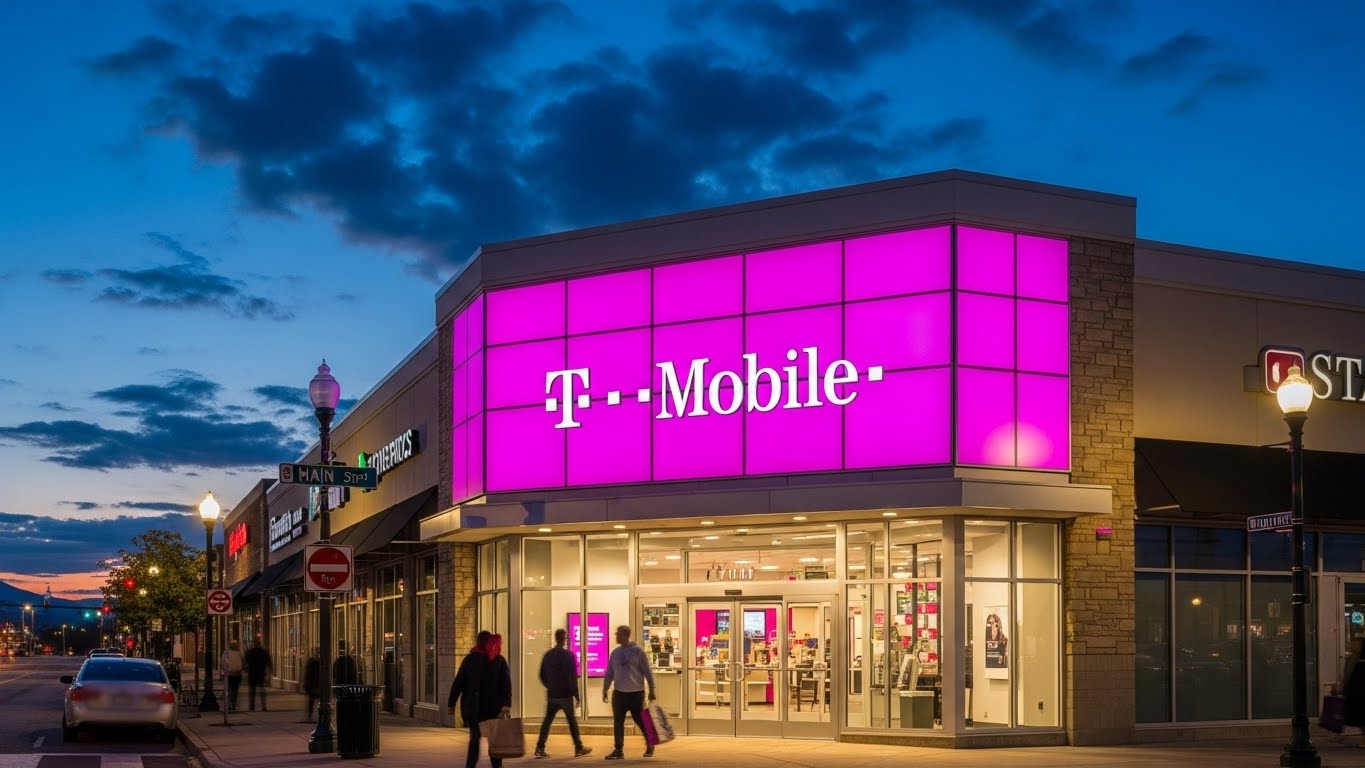
In the fast-paced world of digital connectivity, typing **”T Mobile near me”** into a search bar is often the first step toward solving a communication crisis, upgrading to the latest technology, or finding a more affordable wireless plan. T-Mobile has evolved from a scrappy underdog in the 1990s to a dominant force in the global telecommunications market today. However, finding a local store is about more than just directions; it is about understanding what services are offered, knowing the history of the brand you are trusting, and navigating the complex web of modern 5G plans.
This extensive article serves as the ultimate resource for anyone searching for a T-Mobile location. We will traverse the company’s fascinating history—including old details about VoiceStream and the pivotal Sprint merger—and explore the cutting-edge reality of their current network, “Go5G” plans, and home internet solutions.
Navigating the Search: Finding the Right “T Mobile Near Me”
When you look for a T-Mobile store, the results on your map might look identical, but not all locations are created equal. Understanding the distinction between store types can significantly improve your customer experience.
Corporate Stores vs. Authorized Retailers (TPR)
The most critical distinction in the T-Mobile retail ecosystem is between “Corporate Stores” and “Authorized Retailers” (often referred to internally as TPR or Third-Party Retailers).
1. Corporate Stores: These locations are owned and operated directly by T-Mobile US. The employees are direct staff members of the company. Generally, corporate stores have the highest level of access to billing systems, account overriding capabilities, and inventory. If you are dealing with a complex issue—such as a billing dispute, a confusing jumping-the-gun upgrade, or a difficult account migration—a corporate store is your safest bet.
2. Authorized Retailers: These stores look nearly identical to corporate locations. They wear the magenta uniforms and sell the same phones. However, they are franchises owned by third-party companies. While they are excellent for straightforward transactions like buying a new phone, activating a prepaid line, or purchasing accessories, they may sometimes have limited permissions regarding backend account corrections.
“How to tell the difference:” When you search “T Mobile near me” on the official T-Mobile website, the store details will often indicate if it is an “Authorized Retailer.” If it does not say that, it is likely a corporate location.
Services Available In-Store
While online shopping is convenient, physical stores remain vital for specific services:
Instant Trade-Ins: Mailing in a trade-in device can be risky; if it gets damaged in transit, you lose your credit. In-store, a rep inspects the phone, accepts it, and the credit is applied immediately.
SIM Swaps and eSIM Activation: If your phone is lost or stolen, a store is the fastest way to get a new SIM card and restore your service.
5G Home Internet Pickup: Instead of waiting for a shipping delivery, you can often walk out with the 5G Gateway device the same day you sign up.
Troubleshooting: Sometimes, you just need a human to look at your settings. Store reps can help with APN settings, network resets, and data transfer assistance.
The Historical Evolution: From VoiceStream to the Un-carrier
To truly appreciate the service you get today, it is essential to look at the “old details” of T-Mobile’s history. The company’s journey is a masterclass in business resilience and rebranding.
The Origins: VoiceStream Wireless (1994–2001)
Long before the brand became synonymous with the color magenta, the company began as “VoiceStream Wireless” in 1994. It was a subsidiary of Western Wireless Corporation, founded by John Stanton.
The GSM Advantage: In the 1990s, the US wireless market was fragmented. Competitors like Verizon and Sprint used CDMA technology, which did not use SIM cards. VoiceStream bet on “GSM (Global System for Mobile Communications)”, the standard used in Europe. This decision was crucial because it allowed for international roaming and the easy swapping of devices using SIM cards—a feature that tech enthusiasts loved.
The Deutsche Telekom Acquisition (2001)
In 2001, the German telecommunications giant “Deutsche Telekom” (DT) acquired VoiceStream for approximately $35 billion. In 2002, the brand was officially renamed “T-Mobile USA”.
The “Get More” Era: Throughout the early 2000s, T-Mobile positioned itself as a value carrier. They famously hired actress “Catherine Zeta-Jones” as their global spokesperson. The marketing slogan “Get More” was everywhere. This era established T-Mobile as a “cool” and youthful brand, distinct from the corporate stiffness of AT&T or Verizon.
The Dark Ages and the Failed AT&T Buyout (2011)
By 2011, T-Mobile was in trouble. It was the fourth-largest carrier in the US, subscriber numbers were dropping, and it did not have the iPhone (which was exclusive to AT&T and then Verizon). The network was struggling to keep up with 3G and 4G demands.
The Attempted Merger: AT&T announced a plan to acquire T-Mobile USA for $39 billion. Many thought this was the end of the T-Mobile brand.
The Government Block: The US Department of Justice blocked the merger on antitrust grounds, arguing that reducing the market from four major players to three would harm consumers.
The Breakup Fee: This is the most important “old detail” that saved the company. Because the deal failed, AT&T was contractually obligated to pay T-Mobile a “breakup fee”. This included $3 billion in cash and roughly $1 billion worth of wireless spectrum. This massive injection of capital and resources gave T-Mobile the war chest it needed to rebuild its network.
The Un-carrier Revolution (2013–2019)
In 2012, John Legere was appointed CEO. He grew his hair long, wore T-Mobile branded t-shirts, and declared war on the industry, calling the competitors “Dumb and Dumber.” He launched the “Un-carrier” strategy, which systematically removed customer pain points:
Un-carrier 1.0: Eliminated two-year service contracts.
Un-carrier 2.0 (JUMP!): Allowed customers to upgrade phones when they wanted, not when the carrier said so.
Music Freedom & Binge On: Allowed unlimited music and video streaming without eating into data caps (a precursor to unlimited data).
T-Mobile Tuesdays: A loyalty program giving free items (pizza, tacos, movie tickets) to customers just for being customers.
The Sprint Merger (2020): The Game Changer
The most significant event in recent telecom history was T-Mobile’s merger with Sprint.
The Prize: T-Mobile didn’t just want Sprint’s customers; they wanted Sprint’s “2.5GHz Mid-Band Spectrum”. T-Mobile had great low-band (coverage) and high-band (speed in cities), but lacked the middle layer. Sprint had a massive hoard of this mid-band spectrum but lacked the money to deploy it.
The Result: By combining forces, T-Mobile created a 5G network that arguably surpassed both Verizon and AT&T in coverage and speed, leading us to the current landscape.
The Current Landscape: 5G Dominance and Modern Plans
When you walk into a store today after searching “T Mobile near me,” you are entering a different world than the VoiceStream days. Here is what defines the T-Mobile experience in the current era.
The 5G “Layer Cake”
T-Mobile’s network superiority claims are based on a strategy they call the “Layer Cake.” Understanding this helps you understand the coverage map:
1. Low-Band 5G (Extended Range): This runs on the 600MHz frequency. It is slow (similar to 4G LTE speeds), but it travels massive distances and penetrates thick walls. This provides the “nationwide” blanket of 5G.
2. Mid-Band 5G (Ultra Capacity / 5G UC): This is the 2.5GHz spectrum from Sprint. It is the “Goldilocks” frequency—fast enough to offer 300Mbps to 1Gbps speeds, but with decent range. If you see the “5G UC” icon on your phone, you are on this layer.
3. High-Band 5G (mmWave): Used only in stadiums and dense urban centers. It offers incredibly high speeds, but the signal is easily blocked by trees or glass.
The “Go5G” Plan Structure
Recently, T-Mobile retired the “Magenta” branding for new customers, replacing it with “Go5G”. If you visit a store today, these are the plans you will be pitched:
Go5G Next: The most premium plan. It includes unlimited premium data (your speeds are never throttled regardless of usage), 50GB of high-speed hotspot data, and most importantly, the ability to upgrade your phone “Every Year”. It also bundles Netflix, Apple TV+, and Hulu.
Go5G Plus: Similar to “Next,” but the phone upgrade cycle is every two years. It features the “New in Two” promise, ensuring that existing customers get the same device promotions as new customers—a major shift from the industry standard where only new lines get the best deals.
Go5G: The standard plan. It offers substantial data but less hotspot allowance and fewer streaming perks.
Essentials: The budget postpaid option. Taxes and fees are not included (unlike the Go5G plans, where taxes are included in the price), and data may be slower during times of congestion.
T-Mobile Home Internet
One of the main reasons people search for “T Mobile near me” today is to sign up for Home Internet.
How it works: It uses the same 5G network as your phone. You receive a gateway box, plug it into an electrical outlet, and it creates a Wi-Fi network.
Who it is for: It is ideal for people in rural areas where fiber is unavailable, or for renters who hate dealing with cable installation appointments.
The Caveat: It is “deprioritized” data. This means if a cell tower is congested with mobile phone traffic, Home Internet speeds will slow down first.
Maximizing Your Store Visit: Tips and Tricks
To ensure your trip to a T-Mobile location is efficient and successful, follow these strategic tips.
1. Book an Appointment
Walk-ins are welcome, but T-Mobile stores can get incredibly busy, especially on weekends or during an iPhone launch. Use the “T Mobile near me” store locator on their website to find the “Schedule an Appointment” button. This puts you in a virtual queue.
2. Check for “Insider Codes”
This is a pro tip often discussed on Reddit and tech forums. T-Mobile employees are occasionally given “Insider Codes” to close deals. These codes can provide 20% off the voice lines for the life of the account. While they are usually reserved for friends and family or converting difficult customers from Verizon/AT&T, it never hurts to politely ask a manager if they have any available codes when you are opening a new account on a premium plan.
3. Bring the Right Documents
For security reasons, T-Mobile stores are strict.
Valid ID: A driver’s license, passport, or state ID is mandatory.
Account PIN: You must know your 6-to-15 digit account PIN. If you don’t know it, you must have your working T-Mobile phone with you to receive a One-Time Passcode (OTP) text message.
Authorized Users: If you are not the “Primary Account Holder,” you must be listed as an “Authorized User” on the account to make changes or buy phones.
4. The “T-Life” App (formerly T-Mobile Tuesdays)
Before heading to the store, check your T-Life app. Occasionally, T-Mobile offers free physical merchandise (branded flashlights, tumblers, beach towels, hats) that must be picked up in-store on Tuesdays. These items run out fast, so getting there early is key.
Frequently Asked Questions (FAQ)
Q1: What Time Do T-Mobile Stores Close?
A: Operating hours vary by location. Standalone corporate stores typically close at 8:00 PM Monday through Saturday and 6:00 PM on Sundays. However, Mall locations (kiosks and stores inside shopping centers) follow the mall’s hours, which may close later (9:00 PM). Always check the specific Google Maps listing for the store near you.
Q2: Can I Pay My Bill at a T-Mobile Store Near Me?
A: Yes. You can pay via a self-service kiosk (available in most corporate stores) or with a representative. Note that paying with a representative may incur a “Support Charge” (usually $5 or $10), which can be avoided by paying online or using the kiosk.
Q3: Does T-Mobile Offer Senior Discounts?
A: T-Mobile is famous for its “Unlimited 55+” plans. These are heavily discounted plans available exclusively to customers aged 55 and older. Unlike other carriers that limit these to Florida, T-Mobile offers them nationwide. You will need to show ID in the store to verify your age.
Q4: Are Sprint Stores Still Open?
A: No. Following the 2020 merger, the Sprint brand was retired. All former Sprint stores have either been converted into T-Mobile stores or permanently closed. Sprint customers are now fully integrated into T-Mobile’s systems and should visit T-Mobile stores for support.
Q5: Can I Return a Device I Bought Online to a Store Near Me?
A: Generally, yes. T-Mobile now allows Cross-Channel Returns. However, there may be a restocking fee (usually $50 to $70, depending on the device) if the box has been opened. It is recommended to bring the original shipping receipt and all accessories.
The Future of Connectivity
As we look toward 2026 and beyond, T-Mobile is continuing to innovate. The company is currently experimenting with Satellite-to-Cellular technology in partnership with SpaceX. This aims to eliminate “dead zones” entirely by allowing existing phones to connect to Starlink satellites for text messaging in emergencies, even when there is no terrestrial cell tower nearby.
Furthermore, T-Mobile is expanding into “T-Mobile Fiber” in select markets, moving from wireless to wired home internet to compete directly with cable giants.
Conclusion
Searching for “T Mobile near me” opens the door to more than just a retail transaction. It connects you to a network built on a history of disruption—from the GSM bets of VoiceStream to the aggressive consumer-friendly moves of the Un-carrier era, and finally to the massive 5G capacity gained from Sprint.
Whether you are looking to trade in an old device for the latest iPhone, seeking a lower monthly bill through the 55+ plans, or trying to set up high-speed internet in a rural home, the local T-Mobile store is your access point. By understanding the difference between corporate and authorized stores, preparing your documentation, and knowing the value of the current Go5G plans, you can ensure that your visit is smooth, efficient, and rewarding. The “Un-carrier” spirit lives on in these local hubs, ready to keep you connected to the world.