
 By martin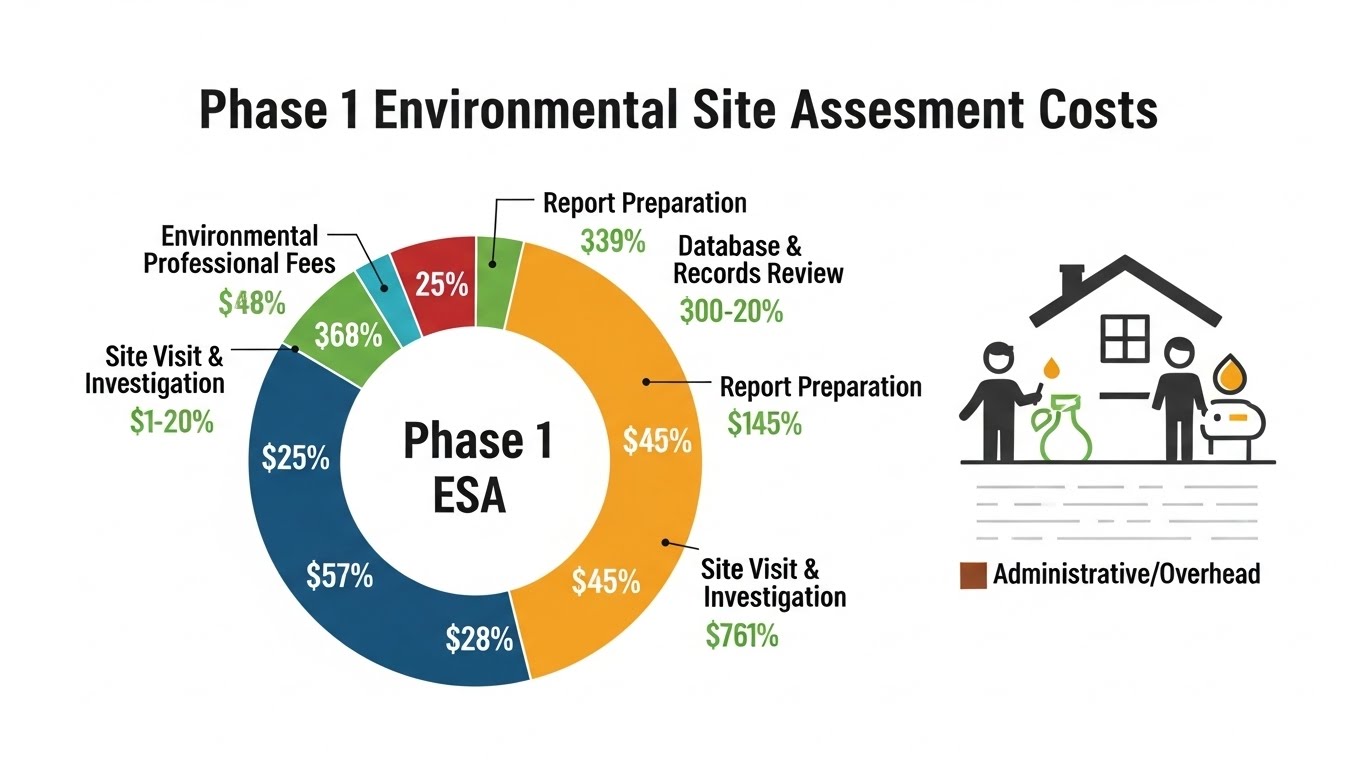
Have you ever bought a property and later found out it hid an expensive surprise? One buried tank or an old industrial spill can turn a great deal into a financial nightmare. That’s why getting the phase 1 environmental site assessment cost right matters more than you think.
If you want the short answer up front: expect most standard reports to fall between $1,800 and $3,500. Complex sites — gas stations, old factories, or sprawling multi-parcel land — can push the phase 1 environmental site assessment cost to $6,500 or more. And in rare, tricky cases, total costs tied to the assessment and follow-up testing can climb much higher.
This guide explains exactly what shapes the phase 1 environmental site assessment cost, what you’re paying for, and how to budget so you avoid nightmares after closing. I’ve done dozens of assessments, and I’ll share real examples and practical rules you can use today.
Quick Price Snapshot
- Low-risk, small sites: $1,500–$1,800
- Most commercial properties: $1,800–$3,500
- High-risk or large sites: $4,000–$7,000+
- Rush jobs (under 10 business days): add 25–50%
Before we dig deeper, one thing to remember: the cheapest phase 1 environmental site assessment cost quote isn’t always the best deal. A client once chose a $350 cheaper report and later discovered a leaking underground tank. Cleanup topped $120,000. That $350 “saving” turned into a disaster.
What Phase 1 Includes (and Why it Costs Money)
When you pay for a Phase 1, you’re paying for an expert’s time and tools. A proper Phase 1 follows ASTM standards and includes:
- Third-party database pulls (federal, state, and local records) — these cost money and are part of the overall phase 1 environmental site assessment cost.
- Historical research: aerial photos, Sanborn maps, old city directories, permits — sometimes going back decades.
- A site visit: the pro walks the property, checks for stains, stressed plants, odors, pipes, and obvious storage.
- Interviews: current owners, neighbors, local fire or health departments.
- A final report with a written opinion about any Recognized Environmental Conditions (RECs).
Travel time, data purchases, and senior reviews add up — and that’s what creates the phase 1 environmental site assessment cost.
The three Common Pricing Tiers
Low-Risk or Simple Sites ($1,500–$1,800)
These are vacant lots, tiny rural buildings, or very new construction with no history of industrial use. They’re not risk-free, but they usually need less digging.
Standard Commercial Properties ($1,800–$3,500)
This covers most office buildings, strip retail, multi-family housing, and light warehouses. For most buyers, this is the usual phase 1 environmental site assessment cost range.
High-Risk or Complicated Sites ($4,000–$7,000+)
Gas stations, dry cleaners, trucking yards, older factories, or large tracts of land need deeper historical research and a longer site visit. Expect the price to climb.
The 7 Factors That Change Your Quote
- Property type and past use. Old gas stations or manufacturing sites raise flags — and fees.
- Size and parcel count. More acres or multiple addresses mean more database pulls and more time in the field.
- Location and travel. Rural, out-of-town sites add mileage and billable hours. Urban sites may need extra historical research.
- Age and records availability. Older sites with patchy records take longer to research. Missing files often mean extra trips to archives.
- Current condition. Tanks, stains, or stored chemicals on site raise the work level — and the phase 1 environmental site assessment cost.
- Turnaround time. Need it fast? Expect a rush fee. Faster = pricier.
- Consultant qualification. Senior experts cost more, but they spot issues junior staff often miss — that can save you tens of thousands later.
Line-item Breakdown: Where the Phase 1 Environmental Site Assessment Cost Goes
When you ask for a quote, check the line items. Typical expenses include:
- Database reports (EDR or similar vendors).
- Staff time (research, fieldwork, senior review).
- Travel and logistics (mileage, parking, time on the road).
- Report prep (maps, photos, drafting, editing).
- Admin and insurance (small firm overhead that’s passed on).
Knowing what each piece costs helps you compare quotes that may otherwise look similar.
Real Examples that Show How Pricing Works
Imagine a 2,500 sq ft retail unit downtown. A local consultant quotes $2,700 — that’s a typical phase 1 environmental site assessment cost for a standard commercial buy.
Now picture a 5-acre parcel once used for light manufacturing. The firm quotes $6,500 because of size, mixed historic use, and the need to dig into old records. Both figures reflect time, travel, and how much history needs review.
What Happens if a Phase 1 Flags a Problem?
If the Phase 1 finds a Recognized Environmental Condition (REC), you’ll likely need a Phase 2 — the part with drilling, sampling, and lab tests. Typical Phase 2 ranges:
- Basic testing: $5,000–$8,000
- Standard investigation: $10,000–$25,000
- Complex contamination: $50,000+
Always budget contingency beyond the phase 1 environmental site assessment cost for this reason.
Who Normally Pays?
In most commercial deals, the buyer pays. The buyer’s lender usually requires the report, and the buyer wants it in their name for liability protection. Sellers sometimes pre-order a Phase 1 to speed the sale, but that’s less common.
If you’re refinancing, the owner pays since they’re securing the loan.
Tips to Get a Fair Quote (and Avoid Cheap Traps)
- Ask for a detailed scope. Which databases? How many parcels? What’s included in the site visit?
- Compare sample reports. A clear, thorough sample shows the firm knows its stuff.
- Don’t pick the cheapest blindly. Cheap often means skimpy scope.
- Budget for contingency. Add 5–15% for possible Phase 2 work.
- Consider local experience. A consultant who knows the area’s history finds issues faster.
These simple steps help you avoid paying a low phase 1 environmental site assessment cost up front and a huge cleanup bill later.
How to Compare Quotes Like a Pro — a Quick Checklist
- Are database vendors named?
- How many addresses/parcels are included?
- Is a senior reviewer signing the report?
- Are travel and rush fees spelled out?
- Are asbestos, lead, and mold listed as add-ons?
- Is the turnaround time acceptable for your closing?
If any item is missing, ask. Transparency now prevents surprise invoices later.
Negotiation Tactics and Buyer Leverage
If your Phase 1 flags a potential issue, you don’t have to panic. Use the findings to negotiate:
- Ask the seller for a price reduction tied to a conservative clean-up estimate.
- Request seller participation in Phase 2 testing costs.
- Require escrow funds to cover potential remediation.
You can turn a scary finding into a reasonable allocation of risk — but only if you have the Phase 1 in hand.
Common Red Flags Field Pros Look for
- Discolored soil or unusual pooling.
- Strong petroleum or chemical smells.
- Unlabeled drums, tanks, or suspicious vents.
- Patches of odd fill or recent grading.
- A long list of past tenants that used chemicals or heavy equipment.
If a pro spots any of these, expect a higher phase 1 environmental site assessment cost or at least a higher chance of needing Phase 2.
Social Proof: Why Experience Matters
I’ve reviewed dozens of Phase 1 reports and worked on many follow-up investigations. Discounted reports often skip deep record checks or rush the walkover. Seasoned consultants catch subtle clues early and save clients money and headaches down the road. Pay a bit more for proven experience — it often pays for itself.
Quick FAQs
Is a Phase 1 legally required? No federal law forces it, but lenders and liability protections generally require one.
How long is a Phase 1 valid? Typically, 180 days; updates may be needed.
Can I do it myself? No. Lenders expect a qualified environmental professional.
Does Phase 1 test soil or water? No — that’s Phase 2.
Final Checklist Before You Order a Phase 1
- Confirm that the phase 1 environmental site assessment cost includes necessary database searches.
- Ask about parcel counts and the on-site scope.
- Request a sample report and staff qualifications.
- Build a small contingency for Phase 2.
- Avoid the cheapest option if the scope looks thin.
Final Thought
The phase 1 environmental site assessment cost is more than a bill — it’s insurance for your deal. Spending a little more now to avoid a major cleanup later is smart investing. Treat the Phase 1 as part of your risk plan, and you’ll protect your money, your project timeline, and your peace of mind.