
 By martin
Introduction: Wait Does a ₹1 Coin Really Cost More Than ₹1?
Here’s something that catches most people off guard: making a single ₹1 coin actually costs more than one rupee.
Sounds bizarre doesn’t it?
That’s precisely why thousands search for “ek rupee coin ka manufacturing cost kitna hoga” every month. It’s one of those financial puzzles that doesn’t quite make sense when you first hear about it.
But understanding ek rupee coin ka manufacturing cost kitna hoga matters more than you think. It’s not just trivia about coins it connects to government spending, tax money, and how our economy works behind the scenes. Plus, knowing the real numbers helps you cut through the fake news and wild conspiracy theories that keep popping up on WhatsApp and social media.
So let’s get into the actual cost, figure out why it’s higher than the coin’s value, and understand why the government hasn’t stopped making them yet.
What Are People Really Trying to Find Out?
When someone types “ek rupee coin ka manufacturing cost kitna hoga” into Google they’re not hunting for a boring economics textbook.
Here’s what they actually want:
- A clear, direct answer with real numbers
- An explanation that doesn’t require a degree to understand
- Plain language without industry jargon
- Information they can rely on and maybe share with friends
That’s really it. No complicated graphs or theoretical mumbo-jumbo. Just the facts and the reasoning behind them. And that’s exactly what you’re getting here.
So, Ek Rupee Coin Ka Manufacturing Cost Kitna Hoga?
Here’s the Straight Answer
👉 The manufacturing cost sits somewhere between ₹1.10 and ₹1.30 for each coin.
This figure isn’t locked Forever it shifts a little based on steel Prices electricity costs and other variables. But one thing stays consistent: it pretty much always costs more than the coin’s actual worth.
But Hold On Why Would It Cost More Than ₹1?
I know, I know. Your brain’s probably screaming “that makes zero sense!”
But stick with me. Once you see what goes into making these coins you’ll understand why the price climbs above one rupee.
Here’s what pushes the cost higher:
- Stainless steel isn’t cheap, and prices keep climbing
- Industrial minting machines cost crores to buy and maintain
- Skilled technicians and heavy electricity bills add up fast
- Security during transport from mint to banks isn’t free
- Each coin must pass tough quality tests to ensure it survives decades of use
Add each tiny expense together, and suddenly you’re past ₹1. Sometimes well past it.
What Material Goes Into a ₹1 Coin?
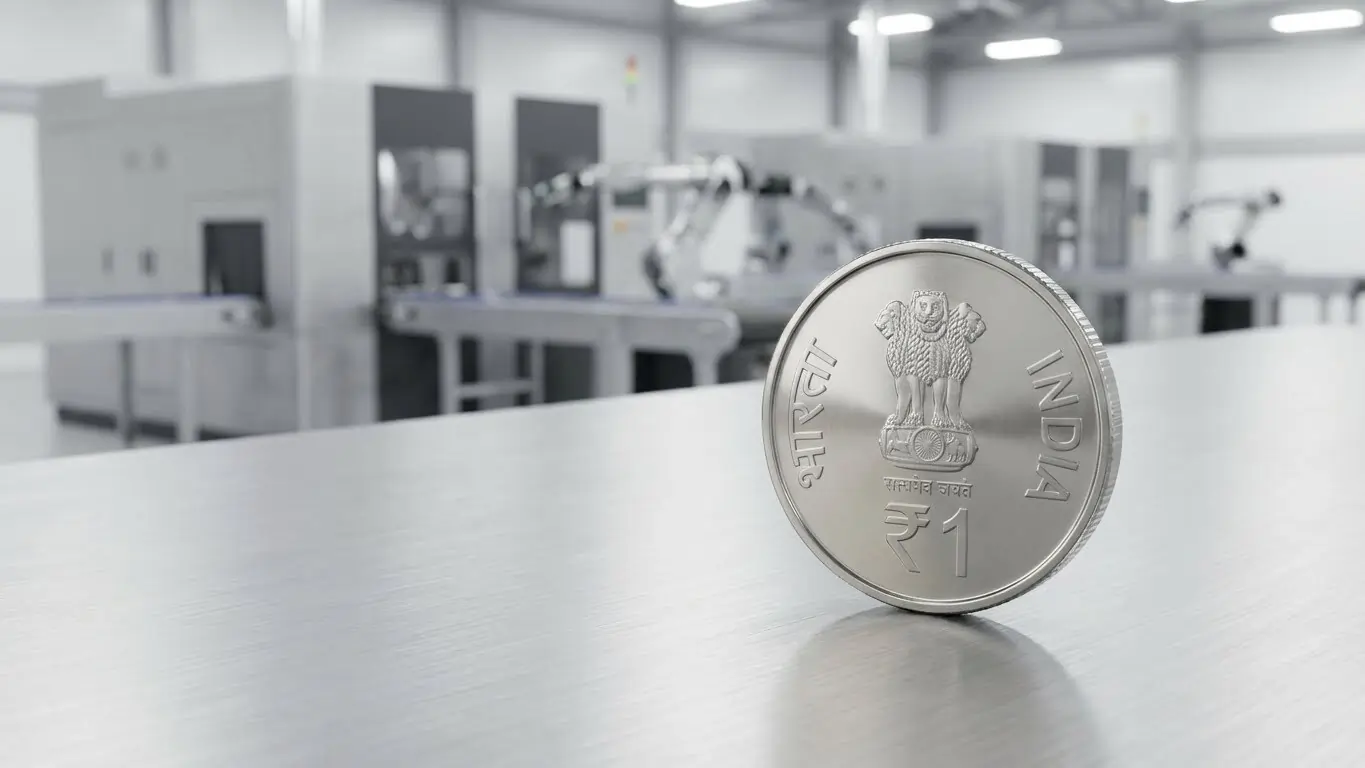
Indian ₹1 coins are crafted from stainless steel.
Think of it as a cocktail of iron, chromium, and just a pinch of nickel mixed together. Why stainless steel? Because it’s incredibly durable. We’re talking about coins that bounce around in pockets, get dropped on roads, survive washing machines, and still work perfectly fine 25 or 30 years later.
But there’s a downside. Metal prices don’t stay put; they swing wildly based on global demand. When steel prices spike in international markets, your manufacturing cost automatically jumps too. That’s just how it works.
Breaking Down the Cost (Where Each Paisa Goes)
Let me break down ek rupee coin ka manufacturing cost kitna hoga into its individual pieces:
What It’s For |
How Much It Costs (₹) |
| Raw steel material |
0.55 – 0.65 |
|
Minting machines & operation |
0.25 – 0.30 |
| Workers’ wages & electricity |
0.10 – 0.15 |
|
Safe transportation & security |
0.05 – 0.10 |
| Total Manufacturing Cost |
₹1.10 – ₹1.30 |
See that? Each individual cost looks tiny. But stack them all together and boom you’ve crossed the one-rupee mark comfortably.
How Are These Coins Actually Made?
Making a coin involves way more steps than most people imagine. It’s not just pressing metal really hard.
Here’s the actual process:
They start with massive sheets of raw stainless steel. Then machines punch out round blanks that’ll become coins. Next these blanks go through heat treatment; basically they’re heated up to make them tougher and longer lasting. After cooling, both sides get stamped with the coin’s design using hydraulic presses. Quality inspectors then check random samples to catch any defects. Finally, finished coins get packed securely and shipped to Reserve Bank centers and commercial banks nationwide.
Every single stage needs equipment, energy, and human supervision. That’s why ek rupee coin ka manufacturing cost kitna hoga ends up being more than face value you’re paying for a complex industrial process.
Alright, But Why Keep Making Them If They Cost More?
This is what everyone asks after learning about the cost.
And here’s the thing governments don’t look at coins the same way you’d look at buying vegetables. They’re playing the long game.
Here’s Why They Still Make Sense:
- They’re Practically Indestructible
A ₹1 coin can handle 20 to 30 years of constant circulation without breaking down. Meanwhile, a ₹1 paper note? It barely survives 12 to 18 months before it’s torn, filthy, and unusable. You’d need to print 15-20 replacement notes over the lifespan of one coin.
- Daily Life Depends on Them
Picture your everyday routine. Auto rickshaw fare. Chai from the roadside stall. Small vegetable purchases. Temple donations. Local kirana shops. These transactions need exact change, and coins make that possible. Without them, simple shopping becomes complicated.
- Economic Circulation Needs Them
Small denominations keep money flowing smoothly through different economic layers. Remove them, and you create friction in thousands of daily transactions. It’s not exciting stuff, but it’s the infrastructure that keeps things running.
- They’ve Earned Public Trust
People accept ₹1 coins without hesitation. They’re legal tender that won’t disintegrate in rain, won’t tear in a child’s hand, and can’t be accidentally destroyed in the laundry. That kind of reliability has value you can’t easily measure.
What About ₹1 Notes? Aren’t Those Cheaper?
Smart question, and yeah printing a ₹1 note definitely costs less initially.
But here’s the catch: notes are fragile. They get wet, they tear at the folds, they fade, they accumulate dirt. Within a year or two, they’re done. Then you need to print another. And another. And another.
Coins just keep trucking along. Even if they cost more upfront, over two or three decades, they’re actually the bargain option. Sometimes spending more now saves money later.
Is This Problem Unique to India?
Not even close. This headache exists worldwide.
The United States spends nearly 2 cents to manufacture each 1 cent penny. They lose money on every single one but keep making them anyway. Canada finally threw in the towel and stopped producing their lowest coins entirely. Australia followed suit and phased out small denominations years ago.
So when people ask “ek rupee coin ka manufacturing cost kitna hoga” and discover it exceeds face value, they should know India’s in good company facing this challenge.
Will ₹1 Coins Disappear Eventually?
As of now? There’s no official announcement about stopping production.
But let’s look at the reality digital payments are taking over fast. UPI transactions, debit cards, mobile wallets, QR code payments… cash usage drops every year, especially in cities. As this trend continues, government policy might eventually shift.
That said, rural India still relies heavily on physical cash. Small towns and villages use coins daily. So for the foreseeable future, ₹1 coins aren’t going anywhere.
Quick Recap of Key Points
Let me tie this together for you:
- Ek rupee coin ka manufacturing cost kitna hoga? Between ₹1.10 and ₹1.30
- This doesn’t indicate government waste or poor planning
- Coins deliver long term value through decades of durability
- Economic decisions weigh overall utility, not just production cost
- The upfront expense doesn’t capture the complete picture
Commonly Asked Questions
Q1. Ek rupee coin ka manufacturing cost kitna hoga exactly?
The cost ranges from approximately ₹1.10 to ₹1.30 per coin, depending on various factors.
Q2. Does the government lose money making these coins?
Initially, yes each coin costs more than its face value. But over 25-30 years of use, that cost gets spread thin, making it worthwhile.
Q3. Which metal is used in ₹1 coins?
They’re made from stainless steel, which combines iron, chromium, and small amounts of nickel for strength.
Q4. Are new ₹1 coins still being produced?
Absolutely. The mint continues producing them, and banks distribute them regularly.
Q5. Between a ₹1 coin and a ₹1 note, which makes more sense?
For long-term durability and cost-effectiveness? The coin wins easily, despite the higher manufacturing cost.
Q6. Can metal prices affect how much coins cost to make?
Definitely. Since coins use stainless steel, fluctuations in global metal markets directly impact production costs.
Final Thoughts: There’s More to Value Than Price
Look, I completely understand the confusion. Spending ₹1.30 to make something worth ₹1 sounds backwards at first.
But when you zoom out and consider durability, practical necessity, and long-term economics, it makes complete sense. These aren’t just metal discs, they’re essential infrastructure for millions of daily transactions across the country.
So next time you receive a ₹1 coin as change from your local shop, you’ll know there’s more engineering, planning, and economic thinking behind it than meets the eye. The question “ek rupee coin ka manufacturing cost kitna hoga” opens a window into how governments balance immediate expenses against long-term benefits.
Read More :https://acurasportscar.com/